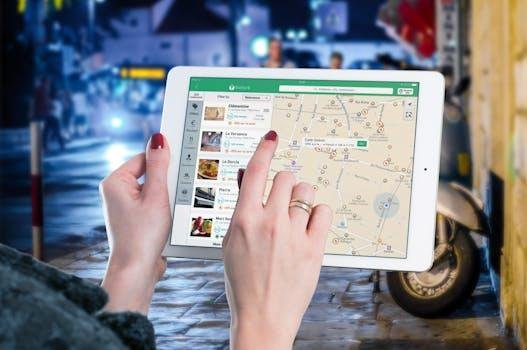
When someone searches for “pharmacy near me” or “roof repair near me”, Google is answering a very specific question: which nearby businesses can solve this problem right now? You cannot move your shop closer to every customer, but you can make sure Google understands what you do, where you do it and why people trust you.
How Google decides local results
Google says local results are based mainly on three factors:
- Relevance — how well your business profile and website match what the person is looking for.
- Distance — how far your business is from the searcher’s location, or from the location named in the search.
- Prominence — how well known and well regarded your business is, online and offline.
Distance is mostly fixed. Relevance and prominence are where your work pays off.
Step 1: Complete your Google Business Profile
Your Google Business Profile (formerly Google My Business) is the single most important asset for “near me” visibility.
- Claim and verify the profile.
- Choose the most accurate primary category, then add secondary categories that genuinely apply.
- Fill in opening hours, services, service areas, attributes and a clear description.
- Add real photos of your premises, team and work.
- Post updates and answer questions from the profile.
Step 2: Make your website locally relevant
Your website should confirm everything your profile says.
- Put your business name, address and phone number on every page, usually in the footer.
- Mention the city or district naturally in titles, headings and body text where it is relevant.
- Embed a map on your contact page.
- Add LocalBusiness structured data (or a more specific subtype) so search engines can read your details reliably.
Step 3: Build reviews into your routine
Reviews influence both prominence and the decision to click. Ask every satisfied customer, make it easy with a direct review link, and reply to all reviews — especially the critical ones — politely and specifically. Never buy or fake reviews; it violates platform rules and destroys trust.
Step 4: Keep your business details consistent
Listings in directories, maps apps and industry sites (“citations”) should match your Google profile exactly. Inconsistent addresses or old phone numbers create doubt about which details are correct.
Step 5: Earn local links and mentions
Sponsor a local event, join the chamber of commerce or a trade association, work with neighbouring businesses, or offer an expert comment to local media. Links from genuinely local sources are strong prominence signals.
Step 6: Get the technical basics right
Most “near me” searches happen on phones. Your site should load quickly, be easy to use on a small screen, and let visitors call or get directions with one tap.
Step 7: Create content for local questions
Answer the questions people in your area ask: local regulations, seasonal problems, typical costs or comparisons. Useful local content earns links and shows relevance at the same time.
Step 8: Measure and adjust
Use the performance data in your Google Business Profile (calls, direction requests, website clicks) and Google Search Console (queries and pages). Look for searches where you appear but rarely get clicked — better titles, photos or reviews often fix that.
Summary
Ranking for “near me” searches is less about tricks and more about being the clearest, most trusted local option: a complete Google Business Profile, a website that confirms your location and services, steady reviews and consistent details everywhere.
For help with local SEO, see my white-hat SEO services and the local SEO examples in my portfolio.